Automated Sentiment Analysis For Brand Reputation In 2026
Last Update: 22 weeks ago
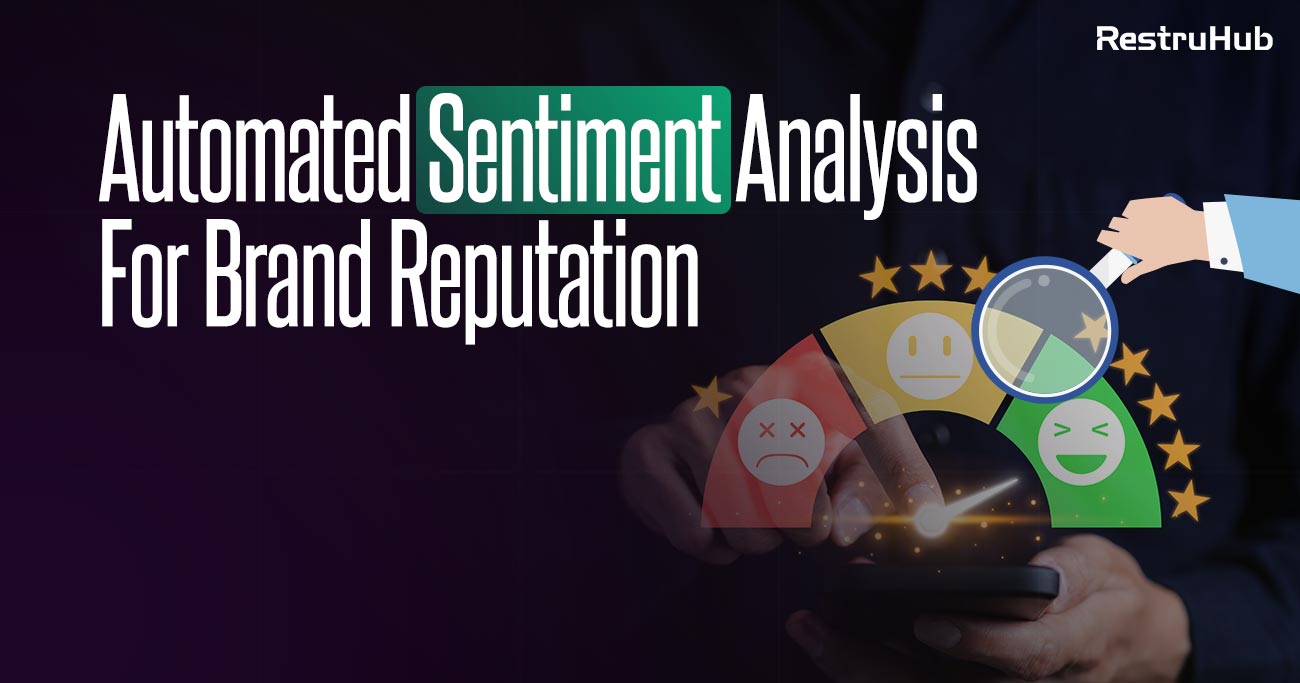
In 2026, brand reputation moves at the speed of customer emotion. Reviews, comments, and ratings across platforms like Google shape public perception within minutes. Star ratings alone no longer tell the full story. What truly matters is how customers feel and how often certain emotions appear in feedback
Automated sentiment analysis helps brands track those emotional signals in real time. Instead of manually reading hundreds of reviews, businesses can instantly identify patterns, detect frustration early, and measure positive momentum. For restaurants and multi location brands, this technology is becoming essential. In a digital first world, understanding sentiment is not optional. It is central to protecting and strengthening brand reputation.
What Is Automated Sentiment Analysis?
Automated sentiment analysis is a technology that uses artificial intelligence to evaluate customer feedback and determine the emotion behind it. Instead of only looking at star ratings, it analyzes written reviews, comments, and messages to classify them as positive, neutral, or negative. Platforms like Google generate large volumes of customer feedback every day, making manual analysis time consuming and inconsistent.
Sentiment analysis tools scan this content instantly, identify patterns, and highlight recurring concerns or praise. This helps businesses understand how customers truly feel about their service, food, pricing, or overall experience. By turning unstructured text into clear emotional insights, automated sentiment analysis supports smarter decision-making and stronger reputation management.
Why Brand Reputation Now Depends on Emotional Data
In today’s digital environment, reputation is shaped less by advertising and more by customer emotion. Reviews, comments, and online conversations reveal how people truly feel. That emotional data now directly influences brand perception and growth.
Star ratings no longer tell the full story
For years, businesses focused mainly on average ratings. A 4.5 star score on Google looked strong enough to attract customers. But star ratings alone do not explain why people feel satisfied or disappointed.
Two restaurants with the same rating can have very different feedback patterns. One may receive consistent praise for service, while the other may show repeated complaints about wait times hidden inside written reviews. Emotional language provides deeper insight than numbers alone. Brands that analyze customer tone and context gain a clearer understanding of what is truly driving satisfaction or frustration.
Customer emotions spread faster than facts
In the digital age, emotions travel quickly across platforms. A frustrated customer is more likely to post detailed complaints, share screenshots, or comment publicly. When others relate to that experience, the conversation grows.
Even if the facts are minor, strong emotional reactions can influence perception significantly. A single viral complaint can shape public opinion within hours. That is why brands must monitor not just volume of feedback but intensity of emotion. Detecting rising frustration early allows businesses to respond before negativity spreads widely.
Emotional trends reveal operational weaknesses
Patterns in emotional feedback often highlight recurring issues. Repeated mentions of slow service, unfriendly staff, or inconsistent food quality signal deeper operational gaps.
When brands track emotional data over time, they can identify where improvements are needed. For example, frequent negative language around delivery experiences may point to logistical problems. Positive emotions around atmosphere may highlight a competitive strength. Emotional data turns subjective opinions into measurable insights that support smarter decision making.
Trust is built on how customers feel
Brand reputation is ultimately about trust. Customers choose restaurants and service providers based on confidence, comfort, and reliability. Those feelings are reflected in reviews and comments more than in marketing messages.
If emotional sentiment trends downward, even slightly, potential customers may hesitate. On the other hand, consistent positive tone builds reassurance. Monitoring emotional shifts helps brands protect trust before visible rating drops occur. Reputation depends on maintaining strong emotional connections, not just high scores.
Data driven brands respond faster and smarter
Modern brands use emotional data to guide responses and strategy. Instead of reacting randomly to individual complaints, they identify patterns and prioritize high impact issues.
Sentiment analysis tools allow leadership teams to see overall mood trends in real time. When negative sentiment rises in a specific location or category, action can be taken immediately. This proactive approach reduces long term damage and strengthens brand perception. In 2026, reputation is not shaped by numbers alone. It is shaped by emotion, and brands that understand emotional data stay ahead.
Automated Sentiment Analysis For Brand Reputation
Customer feedback moves fast in today’s digital landscape. Automated sentiment analysis helps brands understand emotional trends instantly, reduce reputation risks, and turn large volumes of reviews into structured, actionable insights.
Automated Sentiment Analysis For Brand Reputation
Real Time Detection of Customer Emotions
Customers share opinions across platforms like Google within minutes of their experience. Automated sentiment analysis scans reviews, comments, and messages instantly to detect emotional tone. Instead of waiting for monthly reports, brands can see rising frustration or increasing satisfaction as it happens. Real time detection allows managers to respond quickly to negative sentiment before it escalates. It also highlights positive momentum that can be reinforced through marketing or customer engagement. Immediate emotional visibility transforms reputation management from reactive damage control into proactive brand protection.
Accurate Classification of Positive, Neutral, and Negative Feedback
Not all feedback is clearly good or bad. Some reviews include mixed opinions, such as praising food quality while criticizing service speed. Automated sentiment systems analyze language patterns to classify feedback more precisely than simple star ratings. By separating positive, neutral, and negative emotions within text, brands gain a clearer understanding of performance areas. This classification helps prioritize responses and resource allocation. Instead of treating every three star review the same way, businesses can focus on comments carrying stronger negative sentiment and protect reputation more strategically.
Early Identification of Reputation Risks
Reputation rarely collapses overnight without warning. Small emotional shifts often appear first in customer language. Repeated mentions of slow service, inconsistent quality, or poor communication indicate emerging risk areas. Automated sentiment analysis detects these patterns early, even before average ratings decline. This early warning system gives leadership time to investigate and correct operational gaps. Addressing problems at the emotional stage prevents larger public backlash. Proactive intervention reduces the likelihood of viral complaints and long term brand damage.
Sentiment Tracking Across Multiple Locations
For multi location brands, maintaining consistent reputation standards is challenging. One branch may receive positive feedback while another struggles with negative sentiment trends. Automated sentiment analysis aggregates feedback from all locations into centralized dashboards. Managers can compare emotional performance by branch, region, or time period. This visibility highlights which teams need additional support or training. It also helps identify high performing locations that can serve as operational benchmarks. Cross location tracking ensures that brand perception remains aligned across the entire network.
Converting Emotional Data Into Operational Insights
Emotional data becomes valuable when it leads to action. Sentiment analysis transforms raw customer opinions into measurable patterns. If negative language frequently appears around delivery times, operations can adjust staffing or logistics. If positive sentiment centers on ambiance, marketing can emphasize that strength. Structured insights guide decision making across service, training, and customer experience strategies. Instead of relying on assumptions, brands make improvements based on consistent emotional evidence gathered from real customer voices.
Continuous Monitoring to Strengthen Brand Perception
Brand perception is not static. It evolves daily as new reviews are posted. Continuous sentiment monitoring ensures that reputation management is ongoing rather than occasional. Automated systems provide consistent tracking without requiring manual review of hundreds of comments. Over time, leadership can observe whether improvements are shifting emotional tone in a positive direction. Sustained monitoring builds stability and resilience. In a digital first environment, continuous emotional awareness is essential for protecting and strengthening long term brand reputation.
Common Challenges Businesses Face Without Sentiment Automation
Without sentiment automation, businesses rely heavily on manual review monitoring. This often leads to delayed responses, missed warning signs, and incomplete understanding of customer emotions that directly impact brand reputation.
Important emotional signals get overlooked
When teams manually read reviews, it is easy to focus only on star ratings. Written feedback often contains deeper emotional cues that go unnoticed. Subtle frustration, sarcasm, or repeated concerns can be buried inside long comments.
Without automated analysis, businesses may fail to detect patterns forming across dozens of reviews. By the time leadership realizes there is a recurring issue, the damage may already be visible in declining ratings on Google. Missing early emotional signals prevents proactive action and increases the risk of larger reputation problems.
Response strategies become reactive instead of proactive
Manual monitoring usually means businesses respond only after negative reviews accumulate. There is no structured system to detect rising dissatisfaction trends in real time.
This reactive approach makes crisis management harder. Teams scramble to respond when ratings drop or when complaints begin spreading publicly. Without automation, there is no clear visibility into whether negative sentiment is increasing gradually. Proactive strategy depends on early detection, which is difficult without automated tools.
Large volumes of feedback become overwhelming
As businesses grow, review volume increases. Multi location brands may receive hundreds of comments weekly across platforms. Reading, categorizing, and analyzing each review manually consumes time and resources.
Staff may respond inconsistently or miss important feedback entirely. Over time, review management becomes inefficient and fragmented. Automation reduces this burden by organizing feedback into structured sentiment categories, allowing teams to focus on high impact issues instead of sorting through raw data.
Inconsistent insights across locations
For brands operating multiple branches, comparing reputation performance becomes complex without centralized sentiment tracking. One location might struggle with service complaints while another faces quality concerns.
Without automation, leadership relies on surface level metrics like average ratings. This limits the ability to identify location specific emotional trends. Structured sentiment analysis provides consistent data across branches, enabling more accurate comparisons and targeted improvements.
Decision making lacks emotional context
Business decisions often rely on numerical metrics such as sales, ratings, or customer counts. However, these numbers do not explain why performance shifts occur. Emotional context provides that missing layer of understanding.
Without sentiment automation, leadership may guess the reasons behind customer dissatisfaction. This can lead to ineffective solutions. Structured emotional insights guide smarter operational changes, marketing adjustments, and staff training initiatives. In a digital environment where reputation is shaped by perception, ignoring emotional data puts businesses at a strategic disadvantage.
The Role of Real Time Monitoring in Modern Reputation Management
Reputation is shaped in real time. Reviews, comments, and ratings appear instantly, and customer perception can shift within hours. That is why real time monitoring has become central to modern reputation management strategies.
Immediate visibility into customer feedback
Customers share experiences quickly on platforms like Google. Without real time monitoring, businesses may not see new reviews for days. That delay can allow frustration to grow publicly.
Real time systems provide instant alerts when feedback is posted or when ratings drop unexpectedly. Managers can review concerns immediately instead of discovering them later through declining performance metrics. This visibility ensures that no critical feedback goes unnoticed during peak business periods.
Faster response reduces escalation risk
The speed of response often determines whether a small complaint becomes a larger problem. When businesses reply quickly with empathy and clarity, customers feel heard. This can prevent negative conversations from spreading further.
Real time monitoring supports timely engagement. Instead of checking platforms manually, automated alerts notify the right team members. Faster replies signal accountability and professionalism, helping protect brand perception before situations intensify.
Early detection of reputation trends
Reputation rarely shifts suddenly without warning. Subtle changes in review tone, recurring keywords, or slight rating declines often appear first. Real time tracking identifies these signals as they emerge.
If negative sentiment begins increasing around service quality or delivery delays, leadership can investigate immediately. Addressing operational issues early reduces the risk of widespread dissatisfaction. Trend visibility transforms reputation management from reactive damage control into strategic prevention.
Consistent oversight across multiple channels
Modern reputation management requires monitoring more than one platform. Customers leave feedback on review sites, social media, and local directories. Without centralized real time tracking, oversight becomes fragmented.
A structured monitoring approach brings all feedback into one system. This ensures consistent visibility and coordinated responses. When communication is aligned across platforms, brands appear organized and responsive rather than scattered.
Data driven decision making under pressure
During high traffic seasons or promotional campaigns, feedback volume increases. Real time monitoring helps leadership track how customers are reacting during these periods.
If sentiment declines during a campaign, adjustments can be made immediately. If positive feedback increases, successful strategies can be reinforced. Real time data provides clarity during critical business moments, allowing decisions to be guided by actual customer sentiment rather than assumptions.
In a digital first environment, reputation evolves constantly. Real time monitoring is no longer optional. It enables faster action, better coordination, and stronger long term brand stability.
How RestruHub Uses Automated Sentiment Analysis to Protect Restaurant Brands
RestruHub applies automated sentiment analysis to help restaurants understand how customers truly feel across platforms like Google. Instead of relying only on star ratings, the system analyzes review language to detect positive, neutral, and negative emotional patterns in real time.
When negative sentiment begins to rise around specific topics such as service speed or food quality, managers receive alerts quickly. This allows restaurants to investigate and respond before ratings decline further. For multi location brands, RestruHub centralizes sentiment data into one dashboard, making it easier to compare branches and maintain consistency. By turning emotional feedback into structured insights, RestruHub helps restaurants reduce reputation risks and strengthen long term brand perception.
Frequently Asked Questions
How accurate is automated sentiment analysis for restaurant reviews?
Modern sentiment analysis tools use advanced language processing models to evaluate tone, context, and recurring keywords. While no system is perfect, accuracy has improved significantly in recent years. These tools can detect patterns across hundreds of reviews more consistently than manual reading. For restaurants, this means faster identification of common complaints or praise themes, even when feedback wording varies.
Can sentiment analysis replace manual review monitoring?
Sentiment analysis does not completely replace human oversight, but it makes monitoring far more efficient. Automation highlights emotional trends and high risk feedback, allowing managers to focus on meaningful responses. Human judgment is still important for handling complex complaints, but automation reduces the workload and improves consistency.
Does sentiment tracking work for multiple locations?
Yes, sentiment analysis is especially valuable for multi location brands. It aggregates feedback from different branches and identifies location specific trends. This helps leadership compare performance and address issues in specific outlets without guessing.
How quickly can sentiment analysis detect reputation risks?
Automated systems analyze feedback in real time. If negative language increases suddenly, alerts can be triggered immediately. Early detection allows businesses to respond before overall ratings drop significantly on platforms like Google.
Why is emotional data important for brand reputation?
Emotional tone reflects how customers truly perceive a brand. Star ratings show results, but sentiment reveals the reasons behind them. Understanding emotional trends helps businesses improve service quality, strengthen trust, and maintain long term reputation stability.
Want to Grow Your Reviews?
Learn how Restuhub helps 500+ businesses automate their Google reviews.
Free Consultation