Best Google Review Management Software For Restaurants
Last Update: 32 weeks ago
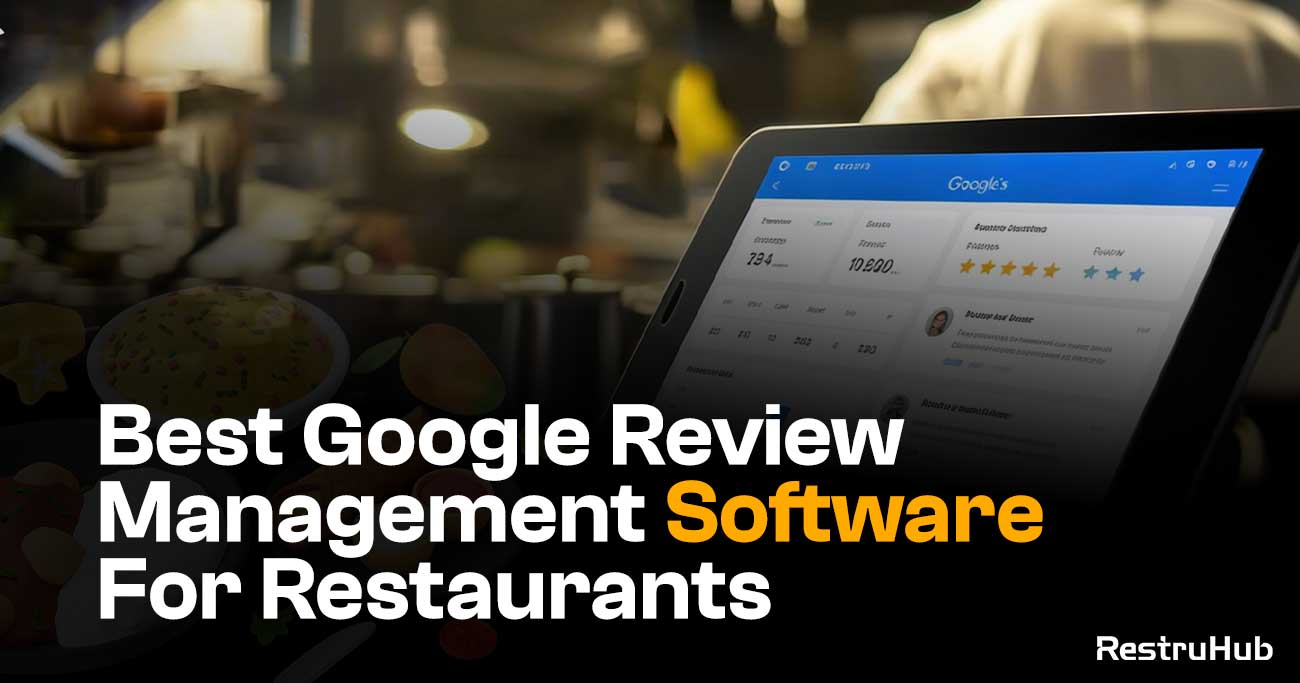
Google reviews play a huge role in how customers choose where to eat. A strong rating can drive steady foot traffic, while unanswered negative feedback can quickly hurt a restaurant’s reputation. For growing brands and multi-location operators, managing reviews manually is no longer practical.
Google review management software helps restaurants monitor feedback in real time, respond quickly, and maintain a consistent brand voice across locations. The right tool can also provide sentiment insights, highlight urgent complaints, and turn customer feedback into operational improvements. In this guide, we compare the best Google review management software for restaurants in 2026 to help you choose the platform that fits your growth goals and reputation strategy.
What Can You Expect From A Google Review Management Software
A Google review management software should do far more than simply notify you about new feedback. In 2026, restaurants operate in a highly competitive environment where ratings directly influence revenue. Customers check Google reviews before deciding where to dine, and public responses shape brand perception. A proper review management platform turns scattered feedback into a structured, actionable system.
Centralized Monitoring Across Locations
The first expectation is centralized visibility. Multi-location restaurants typically have separate Google Business Profiles for each branch. Logging into each account individually is inefficient and increases the risk of missed reviews.
A strong Google review management tool consolidates all reviews into one dashboard. This allows restaurant owners and head office teams to monitor activity across every location in real time. Centralization ensures consistent oversight and prevents negative feedback from going unnoticed.
Real-Time Alerts With Smart Prioritization
Speed is critical in reputation management. When customers leave negative reviews, quick acknowledgment can prevent further damage. A reliable platform should provide instant notifications when new reviews are posted.
Beyond basic alerts, advanced systems prioritize reviews based on urgency. Low-star ratings or emotionally negative feedback should be flagged first. Smart prioritization helps managers focus on high-risk issues before addressing routine positive comments, reducing the chance of escalation.
AI-Assisted Response Support
Responding to reviews manually can become overwhelming, especially for busy restaurant managers. Modern Google review management software should offer AI-powered reply suggestions to streamline the process.
These suggestions should align with hospitality tone, emphasizing empathy and professionalism. However, automation should assist rather than replace human input. Managers must be able to personalize each response to ensure authenticity and relevance.
Sentiment Analysis and Operational Insights
Star ratings alone do not reveal the full story behind customer experiences. A strong platform should analyze review text to identify patterns in sentiment and recurring issues.
For example, if multiple reviews mention slow service at a specific location, management can address staffing or workflow concerns. Categorizing feedback into themes such as food quality, service, cleanliness, or pricing provides actionable insights that improve operations over time.
Performance Tracking and Accountability
A dependable review management tool should also include reporting features that measure performance. Metrics such as average response time, response rate, and rating trends help restaurants evaluate their reputation health.
For multi-location brands, tracking performance by branch ensures accountability. Managers can identify high-performing locations and those requiring additional support. Structured tracking turns review management into a measurable performance indicator rather than a reactive task.
Scalability for Growing Restaurant Brands
Finally, the software must scale as the restaurant grows. Whether adding new branches or increasing review volume, the system should handle expansion without increasing complexity.
The best Google review management software combines centralized monitoring, smart alerts, AI assistance, operational insights, and performance tracking. When implemented effectively, it protects ratings, strengthens customer trust, and transforms reviews into a powerful strategic asset for restaurant growth.
How We Ranked Google Review Management Platforms
- Google-Specific Capabilities – We prioritized platforms that offer strong Google Business Profile integration, real-time review syncing, and Google-focused response workflows rather than broad multi-platform tools only.
- Multi-Location Support – Tools were evaluated based on their ability to centralize and manage reviews across multiple restaurant branches efficiently.
- AI and Automation Features – We assessed AI-powered reply suggestions, smart alert prioritization, and sentiment analysis capabilities.
- Ease of Use – Platforms were ranked on dashboard simplicity, onboarding experience, and daily usability for restaurant managers.
- Response Speed Tools – We examined real-time alerts, workflow efficiency, and response time tracking features.
- Reporting and Insights – We considered analytics depth, location-level performance tracking, and actionable operational insights.
Feature-by-Feature Comparison Table
Best Google Review Management Software For Restaurants
In 2026, managing Google reviews is no longer optional for restaurants. With customer decisions heavily influenced by ratings and public responses, having the right review management software can directly impact growth, trust, and long-term brand reputation.
1. RestruHub – AI Google Review Manager
Description
RestruHub is a Google review management platform built specifically for restaurants, with a strong focus on multi-location operators and franchise brands. Instead of offering broad, multi-industry tools, RestruHub is designed around the unique needs of hospitality businesses where response tone, speed, and brand consistency directly impact customer trust.
The platform centralizes all Google Business Profiles into one unified dashboard, allowing restaurant owners and head office teams to monitor reviews across every location in real time. This eliminates the need to log into separate accounts and reduces the risk of missed feedback. Smart alert prioritization automatically flags low-star and high-risk reviews first, helping teams address urgent issues quickly.
RestruHub also provides AI-powered reply suggestions tailored specifically for hospitality language. Managers can generate professional responses in seconds and personalize them before publishing. With built-in response time tracking, rating trends, and sentiment insights by branch, RestruHub turns Google review management into a measurable performance system that supports operational improvement.
Key Features
- Centralized multi-location Google review dashboard
- Smart negative-first alert prioritization
- AI-powered hospitality-focused reply suggestions
- Response time tracking by location
- Sentiment analysis and branch-level performance reporting
Best For: Growing restaurant chains and franchise networks that need structured, scalable, and Google-focused review management with centralized control.
2. Momos – AI Review Manager
Momos is a restaurant-focused guest experience and reputation management platform that includes an AI Review Manager for handling online feedback. It aggregates reviews from Google and other major platforms into a centralized dashboard, making it easier for restaurant groups to monitor performance across multiple locations.
The platform uses AI to generate suggested responses to reviews, helping teams reply faster while maintaining consistency. Momos also provides sentiment analysis and reporting tools that allow operators to track rating trends and identify recurring customer concerns. Its system is designed to connect review data with broader guest experience insights, giving restaurants more context behind feedback patterns.
Key Features
- Centralized multi-location review monitoring
- AI-generated review response suggestions
- Sentiment analysis and trend reporting
- Performance tracking by location
- Integration with guest experience tools
Best ForRestaurant groups seeking AI-assisted review management combined with broader guest experience analytics.
3. Ovation – Reputation Management
If your priority is preventing negative Google reviews before they happen, Ovation takes a different approach compared to traditional review tools. Instead of focusing only on public responses, Ovation emphasizes real-time guest feedback collection, helping restaurants resolve issues privately before they turn into low-star ratings.
Through its dashboard, restaurants can monitor online reviews while also gathering direct guest feedback via digital surveys. This allows operators to identify service gaps quickly and take corrective action. Multi-location brands can track feedback trends by branch, making it easier to spot recurring operational issues.
While Ovation supports public review monitoring and response workflows, its real strength lies in proactive service recovery rather than pure Google review scaling.
Key Features
- Google review monitoring and response tools
- Real-time guest feedback collection
- Multi-location reporting
- Sentiment trend tracking
- Service recovery workflows
Best For: Restaurant brands focused on preventing negative reviews through proactive guest feedback management.
4. ReviewTrackers – Google Review Management
For restaurant groups that want deeper analytics around Google reviews, ReviewTrackers focuses heavily on data visibility and reporting. The platform aggregates reviews from Google and other major review sites into one dashboard, allowing operators to monitor feedback across multiple locations without switching accounts.
Where ReviewTrackers stands out is in its reporting and trend analysis. Restaurants can track rating changes, response rates, and recurring keywords within reviews. This makes it easier to identify patterns tied to service quality, food consistency, or staffing issues at specific branches.
While it offers review response tools and notifications, the platform leans more toward structured reporting and performance measurement rather than hospitality-tailored AI responses.
Key Features
- Centralized Google review monitoring
- Keyword and sentiment trend analysis
- Multi-location reporting dashboard
- Response tracking and performance metrics
- Review aggregation from major platforms
Best For: Restaurant groups that prioritize detailed review analytics and performance tracking across multiple locations.
5. Birdeye Reviews – Google Review Platform
Birdeye’s Reviews product is built to help businesses monitor, generate, and respond to online reviews at scale. For restaurants, it offers centralized Google review monitoring along with automation tools that streamline engagement across multiple locations. The dashboard aggregates reviews in real time, making it easier to track activity and manage responses without logging into separate accounts.
One of Birdeye’s strengths is its automation layer. Restaurants can send review requests, use AI-assisted response suggestions, and monitor rating trends across branches. The platform also includes sentiment analysis and performance reporting, giving operators visibility into recurring feedback themes.
Because Birdeye serves multiple industries, its tools are broad and feature-rich. For restaurant groups that want strong automation and review generation capabilities alongside monitoring, it provides a comprehensive solution.
Key Features
- Centralized Google review monitoring
- Automated review request campaigns
- AI-assisted response suggestions
- Sentiment analysis and trend reporting
- Multi-location performance dashboard
Best For: Restaurant groups seeking automation-heavy review generation and response tools across multiple locations.
6. Chatmeter – Local Review Management
Chatmeter focuses on local reputation management and multi-location visibility. It brings Google reviews into a centralized platform while combining review monitoring with local SEO insights. For restaurant chains operating across regions, this integrated approach supports both reputation and local search performance.
The platform provides real-time alerts, sentiment analysis, and detailed reporting by location. Operators can compare branches, identify rating gaps, and track response activity. Chatmeter also emphasizes analytics depth, making it suitable for brands that want measurable performance tracking.
Compared to hospitality-specific tools, Chatmeter is broader and more enterprise-oriented. Its strength lies in data, reporting, and location-level visibility rather than restaurant-tailored communication workflows.
Key Features
- Centralized multi-location review monitoring
- Real-time alerts and notifications
- Sentiment analysis and reporting
- Location comparison analytics
- Local SEO and reputation insights
Best For: Large restaurant chains that want detailed analytics and strong local visibility management across markets.
7. Synup – Google Review & Listings Management
Synup combines review monitoring with listings management, helping restaurants maintain accurate location information while managing Google feedback. The platform centralizes reviews from Google into one dashboard, making it easier for multi-location brands to track and respond to customer comments.
In addition to review responses, Synup focuses on ensuring business details such as hours, addresses, and contact information stay consistent across directories. This dual approach supports both reputation management and local visibility.
Synup provides sentiment insights, response tools, and performance reporting by location. While it is not exclusively restaurant-focused, it offers practical tools for chains that want Google review management integrated with broader listings control.
Key Features
- Google review monitoring and responses
- Listings management across directories
- Multi-location dashboard
- Sentiment insights and reporting
Best For: Restaurant brands that want review management combined with location listings accuracy.
Key Factors to Consider Before Choosing a Google Review Tool
Choosing the right Google review management tool can significantly impact how your restaurant handles reputation, customer trust, and operational improvement. Not all platforms are built the same, and the best choice depends on your business model, growth stage, and internal workflows.
Multi-Location Control and Centralization
If you operate more than one restaurant location, centralized control should be your top priority. Managing separate Google Business Profiles manually increases the risk of missed reviews and inconsistent responses.
A strong Google review tool should consolidate all locations into one dashboard. It should allow head office teams to monitor performance, track rating trends, and oversee responses across branches without switching accounts. Centralized visibility ensures brand consistency and reduces operational gaps.
AI Assistance Without Losing Authenticity
Automation is important, but authenticity is critical in hospitality. Look for a tool that offers AI-powered reply suggestions while still allowing managers to personalize responses before publishing.
The goal is to reduce workload without sounding robotic. AI should support speed and structure, but the final message should still reflect your restaurant’s tone and customer care standards.
Smart Alert Prioritization
Not all reviews carry the same urgency. A one-star complaint about food safety is far more critical than a five-star compliment.
Choose software that prioritizes negative or high-risk reviews automatically. Real-time alerts combined with sentiment detection help managers address urgent issues first. This reduces the likelihood of public escalation and protects your brand reputation.
Sentiment Analysis and Operational Insights
Google reviews contain valuable insights beyond star ratings. The best tools analyze review text to identify recurring themes such as slow service, food quality issues, or staff behavior concerns.
Look for software that categorizes feedback and provides location-level reporting. Turning review data into actionable insights helps improve operations and reduce repeated complaints over time.
Response Time Tracking and Accountability
Speed matters in review management. Delayed replies can signal poor customer service and weaken trust.
A reliable Google review tool should track response time metrics by location. This creates accountability and allows leadership to identify branches that need additional support. Structured performance tracking transforms review handling into a measurable KPI.
Scalability and Ease of Use
As your restaurant grows, your review volume will increase. The software you choose should scale with your expansion without becoming overly complex.
Ease of use is equally important. Restaurant managers are busy, and the interface should be intuitive and efficient. Complicated enterprise systems may offer advanced features but can slow adoption if they are difficult to navigate.
Selecting the right Google review management tool requires balancing automation, insight generation, and operational control. By focusing on centralization, smart prioritization, measurable performance, and usability, restaurants can choose a solution that not only protects ratings but also strengthens long-term brand trust and customer loyalty.
Final Discussion
In 2026, Google reviews are no longer just public feedback. They are a direct driver of restaurant visibility, customer trust, and revenue. Choosing the right Google review management software is about more than automation. It is about maintaining brand consistency, responding quickly to negative feedback, and turning customer insights into operational improvements.
For single-location restaurants, simplicity and speed may be the priority. For multi-location brands and franchise networks, centralized control and performance tracking become essential. The best tool should align with your growth plans, internal workflows, and reputation goals.
When implemented correctly, Google review management software becomes a competitive advantage. It helps protect ratings, strengthen guest relationships, and build long-term credibility in an increasingly review-driven restaurant market.
FAQs
How does Google review management software help increase restaurant visibility?
Google reviews directly influence local search rankings and Google Maps visibility. Review management software helps maintain higher response rates, consistent engagement, and stronger ratings, all of which support better local SEO performance and increased discovery by potential customers.
Is Google review management software necessary for single-location restaurants?
While multi-location brands benefit most from centralized systems, single-location restaurants can also gain value. Faster responses, sentiment tracking, and structured monitoring help protect reputation and improve customer trust even for smaller operators.
Can these tools automatically respond to reviews?
Most platforms offer AI-generated draft responses, but human review is still important. Automation speeds up the process, yet personalization ensures replies remain authentic and aligned with hospitality standards.
How quickly should restaurants respond to Google reviews?
Negative reviews should ideally be answered within 24 hours. Positive reviews can be responded to within 24 to 48 hours. Quick engagement shows attentiveness and strengthens customer confidence.
Do these tools only manage Google reviews?
Many platforms support multiple review sites, but Google remains the primary focus due to its influence on search visibility and customer decision-making.
What is the biggest mistake restaurants make with Google reviews?
The most common mistake is inconsistency, either ignoring feedback or responding without structure. Delayed or poorly written replies can damage trust and weaken brand perception.
Want to Grow Your Reviews?
Learn how Restuhub helps 500+ businesses automate their Google reviews.
Free Consultation