Multi-Location Google Review Management Challenges In 2026
Last Update: 24 weeks ago
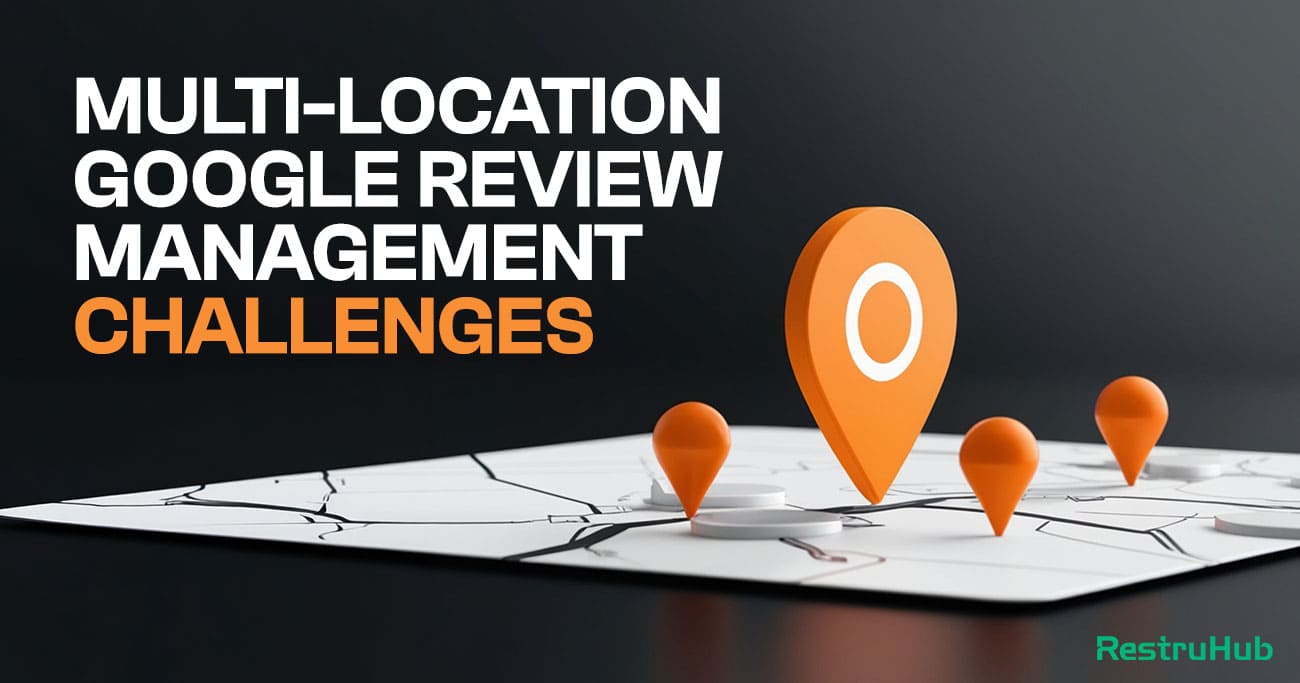
Managing Google reviews across multiple restaurant locations has never been simple, but in 2026 the complexity is even greater. Customer expectations are higher, response speed matters more than ever, and a single negative review can quickly influence buying decisions across digital platforms. When each branch has its own Google Business Profile, feedback becomes fragmented and difficult to control without a structured system
Inconsistent responses, delayed replies, and lack of centralized oversight can weaken brand reputation. For growing restaurant chains and franchises, understanding the key challenges of multi-location Google review management is essential to protect ratings, maintain customer trust, and stay competitive in increasingly crowded local markets.
Why Multi-Location Review Management Is Complex
Managing online reviews for one restaurant is already demanding. When multiple branches are involved, the process becomes significantly more complicated due to operational differences, visibility challenges, and brand consistency risks.
Multiple Google Business Profiles to Monitor
Each restaurant location operates under its own Google Business Profile. That means reviews, ratings, photos, and customer interactions are managed separately for every branch.
Instead of checking one dashboard, restaurant chains must monitor several listings daily. Without centralized oversight, it becomes easy to miss reviews, especially negative ones that require urgent attention.
Inconsistent Operational Standards Across Locations
Even under the same brand, each branch may have different staff, management styles, and service quality. These variations often lead to inconsistent customer experiences.
As a result, ratings and feedback can differ dramatically between locations. One branch may maintain excellent reviews, while another struggles with recurring complaints, making overall brand management more challenging.
Variations in Response Tone and Quality
When individual managers handle reviews independently, responses may lack consistency. Some may reply professionally and quickly, while others delay or respond informally.
This inconsistency weakens brand identity. Customers expect a unified experience across all branches, including how feedback is acknowledged and addressed publicly.
Difficulty Tracking Performance by Location
Looking only at overall brand performance hides location-specific issues. A strong-performing branch can mask underperforming ones if ratings are not analyzed individually.
Tracking trends, response times, and sentiment patterns per location requires structured reporting. Without it, management cannot identify which outlets need operational improvements.
Higher Reputation Risk Exposure
With multiple locations, the risk multiplies. A serious complaint at one branch can spread quickly and affect overall brand perception.
In 2026, customers share experiences across social platforms instantly. Poorly managed reviews at one location may discourage customers from visiting other branches. This interconnected risk makes multi-location review management significantly more complex than handling a single outlet.
Successfully managing reviews across several locations requires centralized systems, clear guidelines, and proactive monitoring to maintain consistent reputation standards.
Multi-Location Google Review Management Challenges
Managing Google reviews across multiple restaurant locations introduces layers of complexity that single-location businesses rarely face. When each branch operates independently but shares the same brand identity, even small review management gaps can create large reputation risks.
Lack of Centralized Monitoring Across Branches
One of the biggest challenges is the absence of a unified monitoring system. Each location typically has its own Google Business Profile, meaning reviews are scattered across multiple listings.
Without centralized visibility, head office teams cannot easily track new reviews, rating drops, or urgent complaints in real time. This fragmentation increases the risk of missed feedback and inconsistent oversight. When monitoring is decentralized, leadership lacks a clear view of overall performance and emerging reputation threats.
Inconsistent Response Tone and Brand Voice
Brand consistency is critical for restaurant chains. However, when individual managers respond to reviews without structured guidelines, tone and messaging can vary significantly.
Some branches may use friendly, professional language, while others may respond briefly or defensively. This inconsistency confuses customers and weakens brand identity. A restaurant brand should sound the same across all locations, especially in public responses that shape customer perception.
Delayed Review Responses from Individual Managers
Local managers are often busy with daily operations such as staff supervision, inventory management, and customer service. As a result, responding to Google reviews may not always be prioritized.
Delays in replying to negative feedback can harm reputation and signal neglect. In multi-location setups, these delays may occur more frequently because there is no centralized reminder or accountability system in place.
Difficulty Tracking Location-Specific Performance
Another major challenge is performance visibility at the branch level. Some restaurant chains only look at overall brand ratings rather than analyzing each location individually.
This approach hides underperforming outlets behind stronger ones. Without structured tracking of ratings, sentiment trends, and response times per branch, management cannot identify which locations need operational improvements. Location-specific insights are essential for maintaining consistent service standards.
Overlooking Mid-Level and Hidden Negative Reviews
Many businesses focus only on one-star reviews, assuming they represent the greatest risk. However, three-star or mixed reviews often contain valuable insights about service delays, food quality issues, or staff behavior.
In multi-location environments with high review volumes, these moderate reviews can easily be overlooked. Hidden dissatisfaction within mid-level ratings may indicate recurring problems that eventually lead to more severe complaints if not addressed early.
Managing Access and Permissions Across Teams
Multi-location restaurants require multiple users to access Google Business Profiles. Without proper role management, confusion can arise over who is responsible for responding to reviews.
Granting too much access may lead to inconsistent messaging, while limiting access too strictly can slow response times. Balancing centralized control with local flexibility is a common operational challenge.
Reputation Risk from One Underperforming Location
Perhaps the most significant challenge is brand-wide reputation exposure. Even though each branch has its own profile, customers often perceive the restaurant brand as a single entity.
If one location consistently receives negative reviews, it can influence how customers view other branches. In today’s digital environment, word spreads quickly. An underperforming location does not just affect local sales; it can weaken overall brand trust and credibility.
Successfully managing these challenges requires structured systems, clear response guidelines, centralized monitoring, and data-driven performance tracking. Without these safeguards, multi-location restaurants face amplified risks that can impact growth, customer loyalty, and long-term brand stability.
Impact of Poor Review Management on Restaurant Chains
For restaurant chains, online reviews are more than public comments. They directly influence local visibility, customer trust, and revenue. When review management is poorly handled, the negative effects multiply across all locations.
Decline in Local Search Rankings
Google reviews play a major role in local SEO performance. Star ratings, review volume, and response activity influence how each location ranks in search results and Google Maps.
If reviews are ignored or ratings decline, individual branches may lose visibility. Lower search rankings mean reduced foot traffic, fewer reservations, and decreased online orders. Over time, this can significantly affect overall chain performance.
Damage to Brand Reputation
Customers rarely separate one branch from the entire brand. If a location receives consistent negative reviews without professional responses, potential customers may assume the brand lacks quality control.
Unanswered complaints create an impression of neglect. Even strong-performing branches can suffer if customers perceive the brand as inconsistent. Poor review management weakens trust and harms long-term credibility.
Loss of Customer Trust and Loyalty
When customers leave feedback, they expect acknowledgment. Ignoring reviews, especially negative ones, signals that customer concerns are not taken seriously.
Timely, professional responses can repair relationships. Without them, dissatisfied customers may not return. In competitive restaurant markets, losing repeat customers directly impacts revenue and growth potential.
Missed Operational Improvement Opportunities
Reviews often highlight recurring issues such as slow service, food quality inconsistencies, or cleanliness concerns. If review management is unstructured, these patterns may go unnoticed.
Without analyzing feedback by location, management cannot implement targeted improvements. Poor review handling prevents restaurant chains from using customer insights to strengthen operations.
Increased Reputation Risk Across Locations
In a multi-location setup, one poorly managed branch can influence overall brand perception. Negative reviews can spread across social platforms and influence customers researching other locations.
Without centralized monitoring and structured responses, small problems escalate into larger reputation risks. Effective review management protects not only individual branches but the entire restaurant chain from long-term damage.
Strategies to Overcome Multi-Location Review Challenges
Managing Google reviews across multiple restaurant locations requires more than reacting to feedback. It demands structure, accountability, and technology. By implementing the right strategies, restaurant chains can maintain consistency, improve response speed, and protect their brand reputation.
Implement a Centralized Review Management System
The first step is centralization. Instead of allowing each branch to operate independently, bring all Google Business Profiles into one unified dashboard. A centralized system allows head office teams to monitor reviews across every location in real time.
This visibility ensures no feedback is missed and makes it easier to track rating changes, recurring complaints, and response activity. Central oversight reduces fragmentation and strengthens accountability.
Establish Clear Response Guidelines and SOPs
Consistency in tone and messaging is critical for brand trust. Develop structured response guidelines that define how managers should reply to positive, neutral, and negative reviews.
Create templates for common scenarios while encouraging personalization. A documented SOP ensures every location communicates professionally and consistently, regardless of who is responding.
Set Measurable Response Time Standards
Speed matters in review management. Define clear response targets, such as replying to negative reviews within 24 hours and positive reviews within 48 hours.
Tracking response times creates accountability. Locations that consistently meet standards reinforce strong reputation management, while underperforming branches can receive additional training or support.
Use Sentiment Analysis to Identify Trends
Instead of relying only on star ratings, analyze the emotional tone and recurring themes within reviews. Sentiment analysis helps detect hidden dissatisfaction in mid-level ratings and identify location-specific operational issues.
By categorizing reviews into areas such as food quality, service, cleanliness, or pricing, restaurant chains can take data-driven actions to improve consistency across branches.
Monitor Performance and Provide Ongoing Training
Regular reporting is essential for long-term success. Track ratings, review volume, sentiment trends, and response quality per location.
Use these insights to identify top-performing branches and those needing improvement. Provide training sessions for managers on professional communication and customer engagement. Continuous improvement ensures review management evolves alongside business growth and customer expectations.
How RestruHub Solves Multi-Location Google Review Management Challenges
Managing reviews across multiple restaurant locations can quickly become overwhelming without the right system. RestruHub simplifies this complexity by centralizing monitoring, standardizing responses, and using smart automation to protect your brand reputation.
Centralized Dashboard for Complete Visibility
RestruHub connects all your Google Business Profiles into one unified dashboard. Instead of logging into separate accounts for each branch, restaurant owners and head office teams can monitor reviews from every location in real time.
This centralized visibility eliminates monitoring gaps and ensures no negative feedback goes unnoticed. Leadership can instantly see rating trends, review activity, and response status across all outlets.
Smart Alert Prioritization and Faster Responses
Not all reviews carry the same urgency. RestruHub uses intelligent prioritization to flag low-star and high-risk reviews first. Urgent feedback is highlighted immediately so managers can respond before issues escalate publicly.
Real-time alerts reduce response delays and help maintain consistent response time standards across every branch, strengthening customer trust and brand credibility.
AI-Powered Response Assistance
To maintain brand consistency, RestruHub offers AI-assisted reply suggestions aligned with your restaurant’s tone and guidelines. Managers can quickly personalize and publish responses without starting from scratch.
This reduces manual workload while ensuring professionalism across all locations, preventing inconsistent or rushed replies.
Location-Level Performance Insights
RestruHub provides detailed analytics for each branch, including ratings, sentiment trends, and response times. These insights help identify underperforming locations and recurring operational issues.
By combining centralized monitoring, smart automation, and data-driven reporting, RestruHub transforms multi-location review management into a structured, scalable system that protects reputation and supports restaurant growth.
Frequently Asked Questions
How do I manage Google reviews for multiple restaurant locations efficiently?
The most efficient way is to use a centralized review management system that connects all Google Business Profiles into one dashboard. This allows you to monitor reviews, track ratings, and manage responses across every location without switching between accounts.
Can each branch respond to reviews independently?
Yes, but it should happen within structured guidelines. Local managers can respond to reviews related to their branch, while head office maintains oversight to ensure brand consistency, tone alignment, and proper handling of sensitive issues.
What is the biggest challenge in multi-location review management?
The biggest challenge is maintaining consistency across locations. Without centralized monitoring and response standards, some branches may ignore reviews or respond unprofessionally, which can weaken overall brand reputation.
How often should performance be reviewed per location?
Performance should ideally be reviewed weekly for response activity and monthly for rating trends and sentiment analysis. Regular monitoring helps identify underperforming branches and recurring operational issues before they escalate.
Why is centralized monitoring important for restaurant chains?
Centralized monitoring ensures no negative review is missed and provides leadership with full visibility into branch-level performance. It reduces reputation risks, improves response speed, and supports consistent customer experience across all locations.
Want to Grow Your Reviews?
Learn how Restuhub helps 500+ businesses automate their Google reviews.
Free Consultation