The Difference Between Ratings vs Sentiments in Google Reviews
Last Update: 33 weeks ago
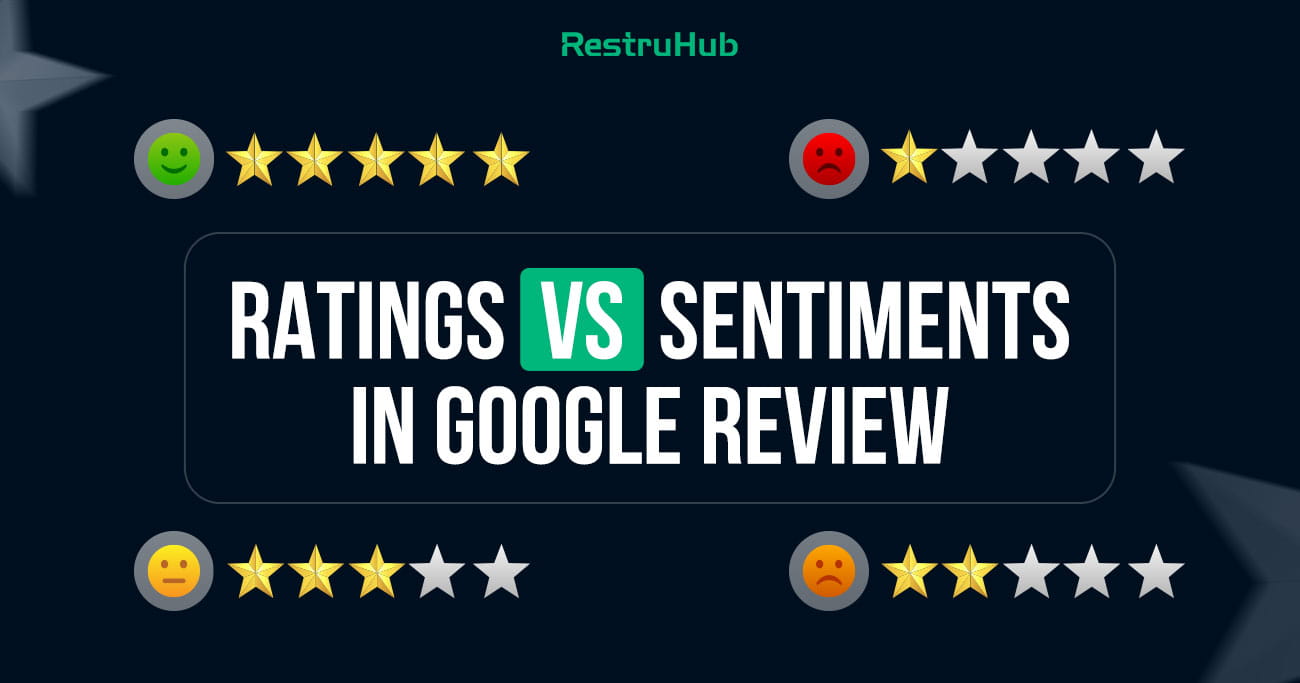
When people look at Google reviews, the first thing they usually notice is the star rating. It gives a quick snapshot of how a restaurant is performing. But numbers alone do not tell the full story. Behind every rating, there is a written review that carries real emotion. A customer might leave four stars but still mention slow service. Another might give three stars while praising the food.
This gap between ratings and sentiments often creates confusion for restaurant owners. Understanding the difference helps businesses move beyond surface-level feedback. When you read both the score and the emotional tone together, you gain clearer insight into what customers truly experienced and what needs attention.
What Are Google Star Ratings?
Google star ratings are numerical scores customers give after their experience with a business. The rating usually ranges from one to five stars, with five representing a highly satisfying experience and one reflecting strong dissatisfaction. These ratings appear at the top of a business profile and strongly influence first impressions.
Star ratings provide a quick summary of overall customer satisfaction. They are easy to understand and allow potential customers to compare restaurants quickly. However, they do not explain the reason behind the score. A three or four star rating could mean different things depending on the experience. Without reading the written review, the number alone does not reveal specific issues or positive highlights.
What Are Customer Sentiments On Google Reviews?
Customer sentiments in Google reviews refer to the emotions and feelings expressed in the written feedback. Unlike star ratings, sentiments are not numbers. They reflect how customers truly felt about their experience. These emotions may include satisfaction, frustration, excitement, disappointment, or even confusion.
Sentiments are found in the words people use to describe food quality, service, pricing, or atmosphere. A review might sound positive overall but still contain small complaints. Another might show strong frustration even with a moderate rating. By analyzing sentiments, restaurants can understand the real emotional tone behind feedback. This deeper insight helps businesses see beyond simple scores and focus on what customers actually experienced.
Key Difference Of Ratings vs Sentiments in Google Reviews
Star ratings and customer sentiments may seem similar, but they represent two very different types of feedback. Ratings provide a quick numerical summary, while sentiments reveal the emotional story behind the experience.
Ratings Are Numerical, Sentiments Are Emotional
Google star ratings are simple numbers from one to five. They show overall satisfaction at a glance. Customer sentiments, on the other hand, reflect feelings expressed in written reviews. Sentiments describe whether someone felt happy, disappointed, frustrated, or impressed. While ratings summarize experience in one click, sentiments explain the emotional reasoning behind that score.
Ratings Offer Speed, Sentiments Offer Depth
Ratings are designed for quick decision making. A 4.5-star restaurant instantly appears trustworthy. However, the number does not explain why customers feel satisfied. Sentiments provide that missing depth. They reveal whether praise is about food quality, friendly staff, fast service, or cozy ambiance. Emotional context adds clarity that numbers alone cannot provide.
Ratings Can Be Misleading Without Context
A four-star rating may still include complaints about slow service. A three-star review might contain positive comments about taste but mention pricing concerns. Without reading the emotional tone of the written feedback, businesses may misunderstand what customers truly experienced. Sentiments help uncover hidden concerns that ratings alone may not reflect clearly.
Sentiments Highlight Specific Operational Areas
Ratings measure general satisfaction. Sentiments break feedback into categories such as food, service, price, and environment. Emotional language often points directly to operational strengths and weaknesses. For example, repeated frustration about waiting time signals workflow issues. Strong praise for staff friendliness shows team performance strength. Sentiments provide actionable insights that ratings cannot isolate on their own.
Ratings Influence First Impressions, Sentiments Shape Decisions
Most customers first notice the star rating when searching on Google. It influences whether they click or continue scrolling. However, many people read reviews before making a final decision. Emotional stories and detailed experiences build trust. Sentiments create relatability. They allow potential customers to imagine their own experience beyond just a number.
Better Business Decisions Require Both
Relying only on ratings limits understanding. Ignoring ratings and focusing only on text can also reduce visibility insights. The strongest strategy combines both. Ratings provide performance overview. Sentiments reveal the emotional drivers behind that performance. Together, they give restaurants a balanced and more accurate view of customer perception.
Ratings vs Sentiments Comparison Table
| Aspect | Ratings | Sentiments |
| Format | Numerical score (1–5 stars) | Written emotional feedback |
| Speed of Understanding | Instant and quick | Requires text analysis |
| Level of Detail | General satisfaction level | Specific emotional insights |
| Context Provided | Very limited | High contextual depth |
| Actionable Insights | Broad direction only | Identifies exact issues |
| Impact on Customers | Affects first impression | Influences final decision |
Why Ratings and Sentiments Often Do Not Match
Star ratings and written sentiments often tell different stories. A number may suggest satisfaction, while the text reveals frustration. This mismatch can confuse restaurant owners who rely only on scores.
Customers Use Ratings Differently
Not all customers treat star ratings the same way. Some people rarely give five stars, even after a good experience. Others may give four stars but still feel completely satisfied. Personal expectations, mood, and comparison standards influence how someone selects a rating. The written review, however, usually explains their real feelings in more detail. Because rating habits vary from person to person, the emotional tone in the text may not fully align with the chosen star score.
Mixed Experiences Lead to Confusing Signals
Many restaurant visits include both positive and negative elements. A guest might love the food but feel disappointed with service speed. In such cases, customers often choose a middle rating like three or four stars. However, the written review may strongly praise one aspect and criticize another. The rating becomes an average of emotions, while the sentiment reflects specific highs and lows. This creates a visible gap between the number and the emotional message.
Emotions Are More Detailed Than Numbers
A star rating compresses the entire experience into one click. Sentiments, on the other hand, allow customers to express subtle emotions. A review might sound polite but still contain dissatisfaction. Another might show excitement that goes beyond what a simple five-star rating communicates. Because emotions are complex and layered, they often reveal insights that numbers alone cannot capture accurately.
How Sentiment Analysis Interprets Review Text
Review text contains emotional signals that are not always obvious at first glance. Sentiment analysis helps interpret these signals by examining language patterns, tone, and context to understand how customers truly feel.
Breaking Down Reviews Into Smaller Parts
Instead of treating a review as one block of text, sentiment analysis divides it into sentences or phrases. Each part is evaluated separately. This allows the system to identify positive feedback about food and negative feedback about service within the same review. By analyzing smaller sections, the system produces more accurate emotional insights rather than assigning a single label to the entire comment.
Identifying Emotion Through Word Patterns
The system scans for words and phrases commonly associated with satisfaction or dissatisfaction. Words like “amazing,” “friendly,” or “perfect” often signal positive sentiment. Terms such as “slow,” “rude,” or “overpriced” indicate frustration. However, the process goes beyond simple keyword matching. It recognizes combinations of words and repeated expressions to detect patterns that reflect consistent emotional tone.
Understanding Context and Meaning
Context plays a major role in accurate interpretation. A word like “cold” can be positive when describing drinks but negative when describing food. Sentiment analysis evaluates surrounding words to determine correct meaning. It also considers sentence structure and modifiers. For example, “not very good” carries a different tone than “very good.” This contextual reading reduces misclassification and improves emotional accuracy.
Measuring Emotional Intensity
Not all emotions carry the same strength. A review that says “it was fine” reflects mild satisfaction, while “absolutely fantastic” shows strong enthusiasm. Sentiment analysis evaluates tone indicators, repetition, and emphasis to estimate emotional intensity. Punctuation and descriptive language also influence how strong an emotion appears. Measuring intensity helps businesses understand whether feedback reflects a minor concern or a serious issue.
Grouping Emotional Trends Over Time
After analyzing individual reviews, the system groups similar emotional patterns together. If multiple reviews express frustration about waiting time, the system identifies it as a recurring issue. Positive trends, such as repeated praise for staff friendliness, are also highlighted. By organizing emotional data into patterns, sentiment analysis transforms scattered comments into structured insights that support better decision making.
The Business Risks of Relying Only on Ratings
Star ratings provide a quick overview of performance, but relying only on them can create blind spots. Without understanding the emotional context behind reviews, restaurants risk making incomplete or misleading business decisions.
Important Issues May Go Unnoticed
A restaurant may maintain a solid four-star average while customers repeatedly mention slow service in written reviews. If management focuses only on the rating, they may assume operations are running smoothly. Emotional feedback often highlights specific concerns that numbers hide. Ignoring sentiments can allow small problems to grow into larger operational issues that eventually impact overall reputation.
Misunderstanding Customer Satisfaction
A three-star rating might appear average, but the written review could contain strong praise with only one minor complaint. On the other hand, a four-star rating may hide clear frustration. Without analyzing emotional tone, restaurants may misjudge how customers truly feel. This misunderstanding can lead to incorrect strategic decisions, such as changing menu items that customers actually enjoy.
Limited Insight for Strategic Improvement
Ratings show general performance trends but do not explain why scores increase or decrease. Sentiments provide the reasoning behind customer satisfaction or dissatisfaction. Relying only on ratings limits the ability to identify specific strengths and weaknesses. Without emotional insights, improvement efforts may become reactive instead of proactive.
Weaker Customer Engagement and Response Strategy
Responding effectively to reviews requires understanding emotion. A frustrated customer needs empathy, while a satisfied guest deserves appreciation. If businesses focus only on ratings, responses may feel generic and disconnected. Over time, this weakens customer relationships and reduces opportunities to build loyalty. Emotional awareness supports stronger communication and long-term trust.
How RestruHub Combines Ratings and Sentiments for Smarter Insights
RestruHub combines star ratings with AI-driven sentiment analysis to give restaurants a complete view of customer feedback. Instead of looking at numbers alone, the platform connects each rating with the emotional tone expressed in the written review. This helps identify whether a four-star rating reflects true satisfaction or hidden concerns.
The system organizes insights by category, such as food, service, pricing, and ambiance. It highlights recurring emotional patterns while also tracking overall rating trends. By viewing ratings and sentiments together in one clear dashboard, restaurant owners can understand both performance metrics and emotional drivers. This balanced approach supports smarter decisions, faster responses, and stronger reputation management.
FAQs
Can a high rating still hide customer dissatisfaction?
Yes, a high rating can sometimes hide small but repeated complaints. Customers may give four stars while mentioning slow service or pricing concerns. Without reading sentiments, these patterns can go unnoticed. Over time, unresolved issues may affect future ratings.
How often should restaurants review sentiment insights alongside ratings?
Restaurants should review both ratings and sentiments regularly, ideally weekly or monthly depending on review volume. Frequent monitoring helps detect emotional trends early. Consistent analysis allows businesses to respond faster and prevent minor issues from turning into larger problems.
Do customer sentiments affect local search visibility on Google?
Indirectly, yes. While Google primarily uses ratings and review activity for ranking, emotional feedback influences customer behavior. Positive sentiments improve click-through rates and trust. Strong engagement signals can support better visibility and overall reputation performance.
Can sentiment analysis identify early warning signs before ratings drop?
Yes, sentiment analysis can detect repeated complaints before average ratings decrease. If multiple reviews mention similar frustrations, it signals a potential issue. Addressing these concerns early helps protect overall rating stability.
Is it possible to improve sentiments without immediately increasing ratings?
Yes, improving service quality or response strategy may first change emotional tone in reviews. Ratings often improve gradually after consistent positive experiences. Stronger sentiments usually lead to higher ratings over time.
Want to Grow Your Reviews?
Learn how Restuhub helps 500+ businesses automate their Google reviews.
Free Consultation